
Intelligent Skin Condition Analysis Device
A device combining a camera and artificial intelligence to analyse skin images and present identified skin conditions.
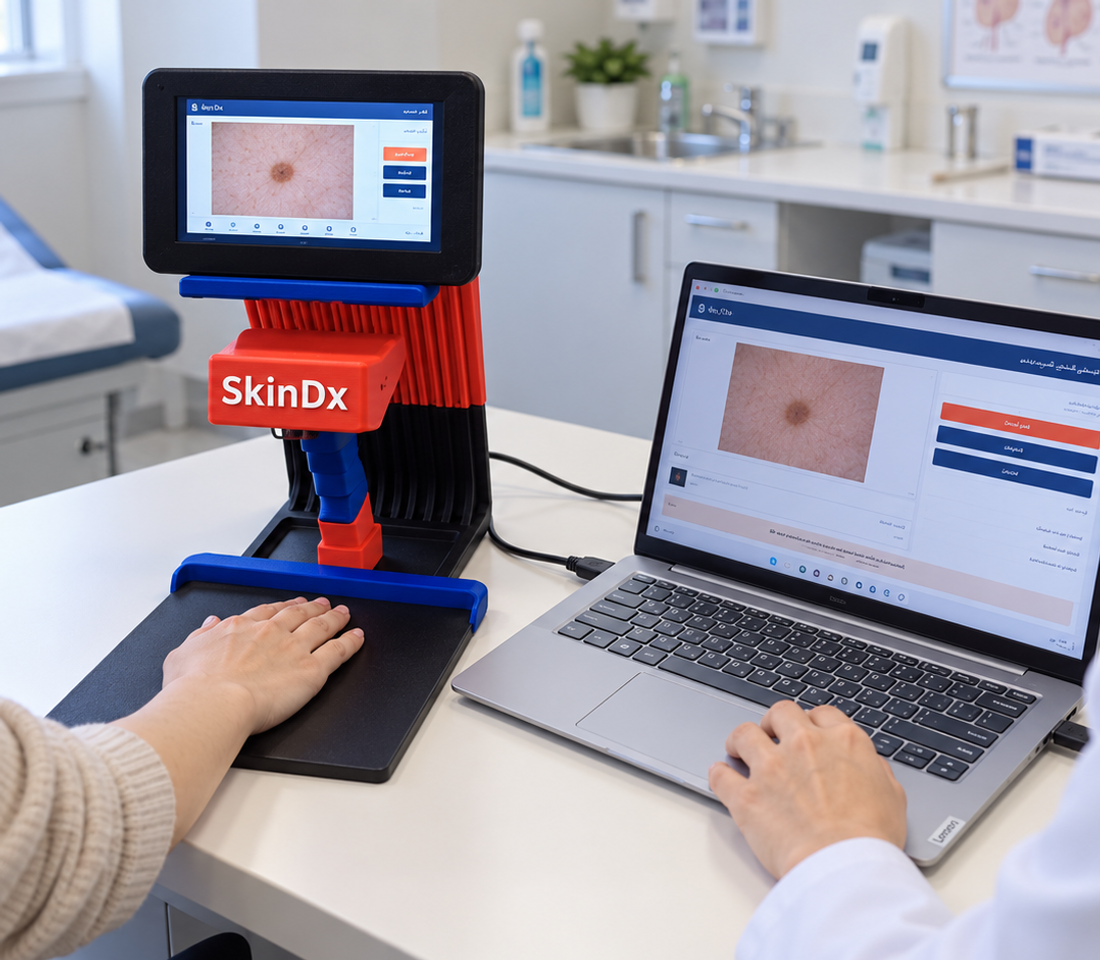
Design a device integrating image capture, image processing and result presentation to support skin condition analysis. The challenge is to combine stable image acquisition with an artificial intelligence model and a clear, accessible interface.
The device combines a mounted camera, a computing unit and AI-based image processing software. The camera captures the skin area to be analysed. The image is then preprocessed and passed to the EfficientNetV2S model, which classifies it into one of the project’s 20 categories.
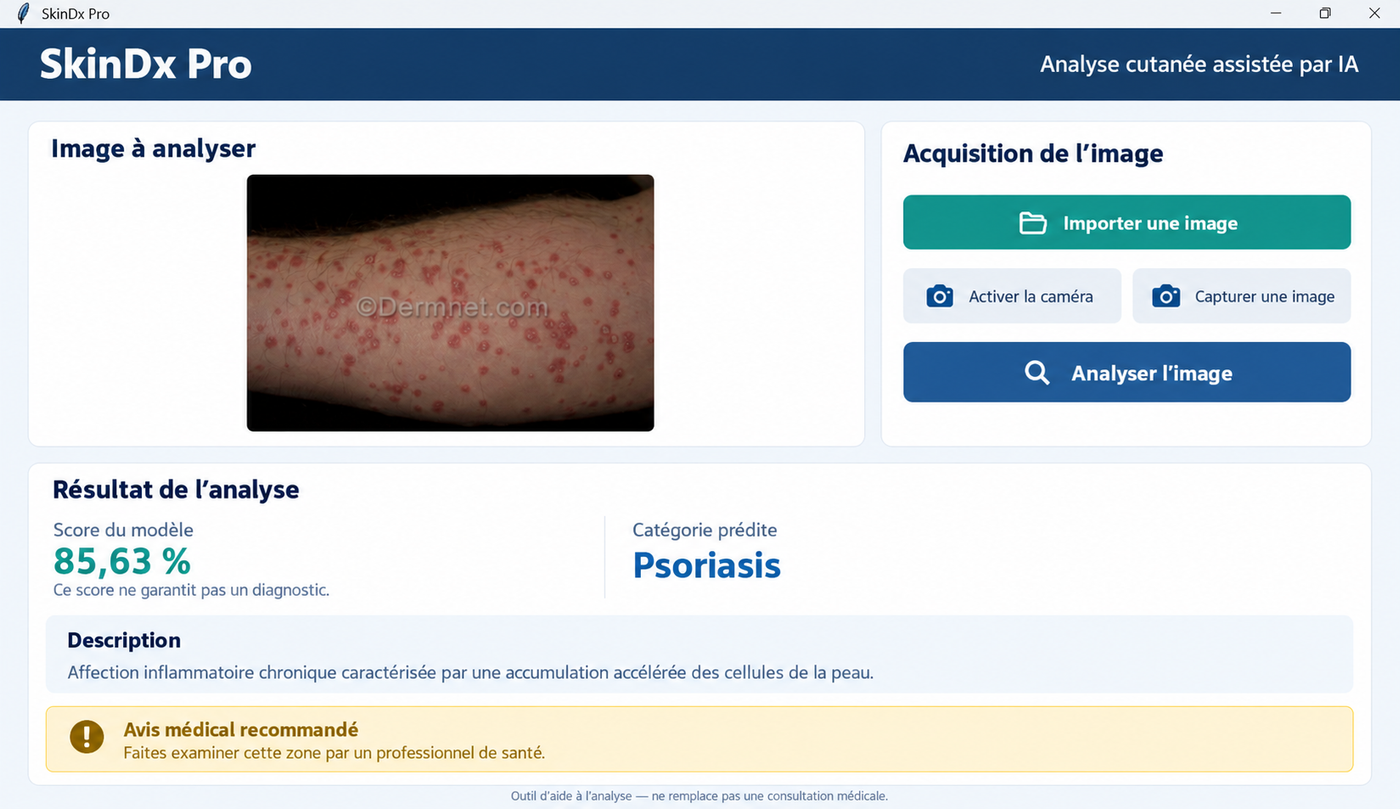
The software displays the image, predicted category, associated score and a simplified description. Arabic–English output and spoken explanations make the results easier to understand. A 3D-printed camera mount helps stabilise image capture. Together, these components form an analysis-support prototype exploring assistance in skin condition assessment.
- 01PositioningThe skin area is positioned within the camera’s field of view.
- 02CaptureThe camera captures an image, which is displayed in the software for verification.
- 03AI processingThe software preprocesses the image, and the model analyses its visual features.
- 04Result presentationThe device presents the predicted category, associated score and a text or spoken description.
- The device supports analysis and does not replace assessment by a healthcare professional. The model score does not guarantee a diagnosis.
- For trials involving contact, provide for cleaning the positioning area between users according to the prototype materials.
The project in pictures
Next steps
- Optimise camera positioning and lighting to obtain more consistent images.
- Test the device across different skin tones, capture conditions and independent image sources.
- Improve identification of blurred, non-skin or difficult-to-classify images.
- Continue testing with dermatologists to assess model limitations and the relevance of displayed information.
Interested in this prototype?
Partnership, further testing or industrialisation with C2S Engineering: let's talk.